Category

Coverage: Express Pharma

"What ails India’s pharma exports?"
Written by
Full Name
Published on
June 20, 2019

The article by Express Pharma Magazine features the Earth Security report 2017. It has been reproduced below with the permission of the author.

Viveka Roychowdhury, 20 June, 2019

It is no secret that declining pharmaceuticals exports have been worrying not just pharma honchos but the Prime Minister’s Office as well. The slide has not been sudden. Trading Economics’ data shows that pharma exports decreased to $2086.32 million in 2016 from $6488.40 million in 2015. They averaged $3902.05 million from 1996 until 2016, reaching an all time high of $11140.5 million in 2013 and a record low of $672 million in 1996.

According to the Directorate General of Commercial Intelligence & Statistics, Government of India, Ministry of Commerce, exports of drugs & pharma de-grew by 5.8 per cent in the first four months of this financial year from $5588.24 million in April–July 2016 to $5264.13 million in the corresponding period this year. It may be a good sign that imports of medical and pharma products de-grew -0.7 per cent during the same period, from $1678.68 million in April–July 2016 to $666.86 million in the corresponding period this year. Interestingly, this July saw a drop of 15.5 per cent, from $449.56 million in July 2016 to $379.9 million.

While India Brand Equity Foundation’s estimates put pharma exports from India at $16.4 billion in 2016-17, and estimate exports to reach $20 billion by 2020, there are more sobering projections. For instance, according to Trading Economics’ global macro models and analysts expectations, in the long-term, India’s pharma exports is projected to trend around $1551.86 million in 2020, as per their econometric models.

While one reason for this drop could be that Indian pharma companies are increasing manufacturing activities in their overseas locations, exports are still a sizeable slice of their revenues. The US alone accounts for approximately a third of total Indian pharma exports,and this has been in a slide for various reasons. A CARE Ratings report dated August 31 has identified four primary contributors for the decline in margins from the US exports: consolidation of pharma distributors in the US, mergers among major drug players, significant increase in Abbreviated New Drug Application (ANDA) approvals and lastly heightened scrutiny by US Food and Drug Administration (US FDA). It is interesting to note that while faster processing of ANDAs, thanks to the Generic Drug User Fee Act (GDUFA), has increased ANDA approvals for India based pharma companies, it has also raised approvals for competitors with ANDAs for the same products. This has increased pricing pressure in the US market in the medium term, especially on plain vanilla products.

The recently released Earth Security Report (ESR) 2017 had a section on India’s pharma sector which points to another headwind on the exports side: poor environmental norms which delay permissions for pharma exporters. The report points out how untreated wastewater from pharma factories is not just polluting water bodies in India but also adding to anti microbial resistance. Not just in Indians, but also foreigners who spend time in India and take back superbugs when they return home.

While the ESR looks at the issue from a sustainability perspective, the pressure on global pharmaceutical to clean up its supply chain, will impact Indian companies as well. According to the ESR, investors like BNP Paribas and Nordea Asset Management are increasingly pressuring international pharma companies to address water pollution in their supply chains. In 2016, Nordea revealed that hundreds of drug companies operating in Hyderabad and Visakhapatnam, were still discharging wastewater from factories linked to the supply chains of the largest global pharma companies in its portfolio, including Sanofi, Novartis, and Roche. Considering that these two states, Telengana and Andhra Pradesh, together account for roughly 20 per cent of India’s pharma exports, there is no doubt that Indian pharma exporters will feel the heat soon from their clients.

In fact, the ESR quotes from media reports that India’s bulk drug exporters had warned the commerce ministry that stricter environmental requirements were creating delays in production and clearances. The then commerce minister Nirmala Sitharaman had promised to take up the complaints of API manufacturers with her counterparts in the environment and chemicals and fertilizers ministries. The ESR points out that while larger manufacturers/ exporters, including Dr Reddy’s, Hetero, Aurobindo, Matrix (Mylan), Divis, Natco, all report to having zero liquid discharge (ZLD) technology and waste processing facilities onsite, common effluent treatment plants for the smaller production plants are over-burdened and under-equipped to process many chemical effluents. Worse, more expensive ZLD equipment is seen as prohibitively expensive for smaller manufacturing facilities. This lack of waste water treatment and other environmental norms would then be a barrier to these smaller companies approaching global clients and accessing global markets.

Thus, it is high time that the sector does a deep dive to find a holistic and sustainable prescription to arrest the slide in pharma exports.

Ripple effects across supply chains
Illuminates how challenges like water scarcity, climate change, and land degradation generate cascading impacts across global supply chains and investment portfolios. 
Integrated systems analysis 
Connects environmental constraints, demographic trends, and governance dynamics to assess how they interact to influence national and sectoral investment stability—enabling investors to anticipate emerging risks and strategic responses.
Country dashboards & sector insights
Delivers tailored intelligence for high-growth sectors across critical production and consumer markets—pinpointing pressure points that signal both risk exposure and investment opportunity. 
Visual storytelling through data
Employs cutting-edge radial graphics inspired by the planetary boundaries framework. Multi-axis indicators make complex systems data intuitive and actionable for decision-makers driving strategic capital allocation.

Explore the reports 

The Earth Security Index Reports provided in-depth analysis of critical themes across selected industries and market geographies, enabling investors to anticipate and respond to emerging global dynamics. Download and explore the full Earth Security Index reports:

Sign up for exclusive insights and strategic briefs
Thank you! Your submission has been received!
Oops! Something went wrong while submitting the form.

The Blue Resilience Capital Initiative

Connecting investors to a curated pipeline of early-stage blue carbon opportunities that build long-term resilience value
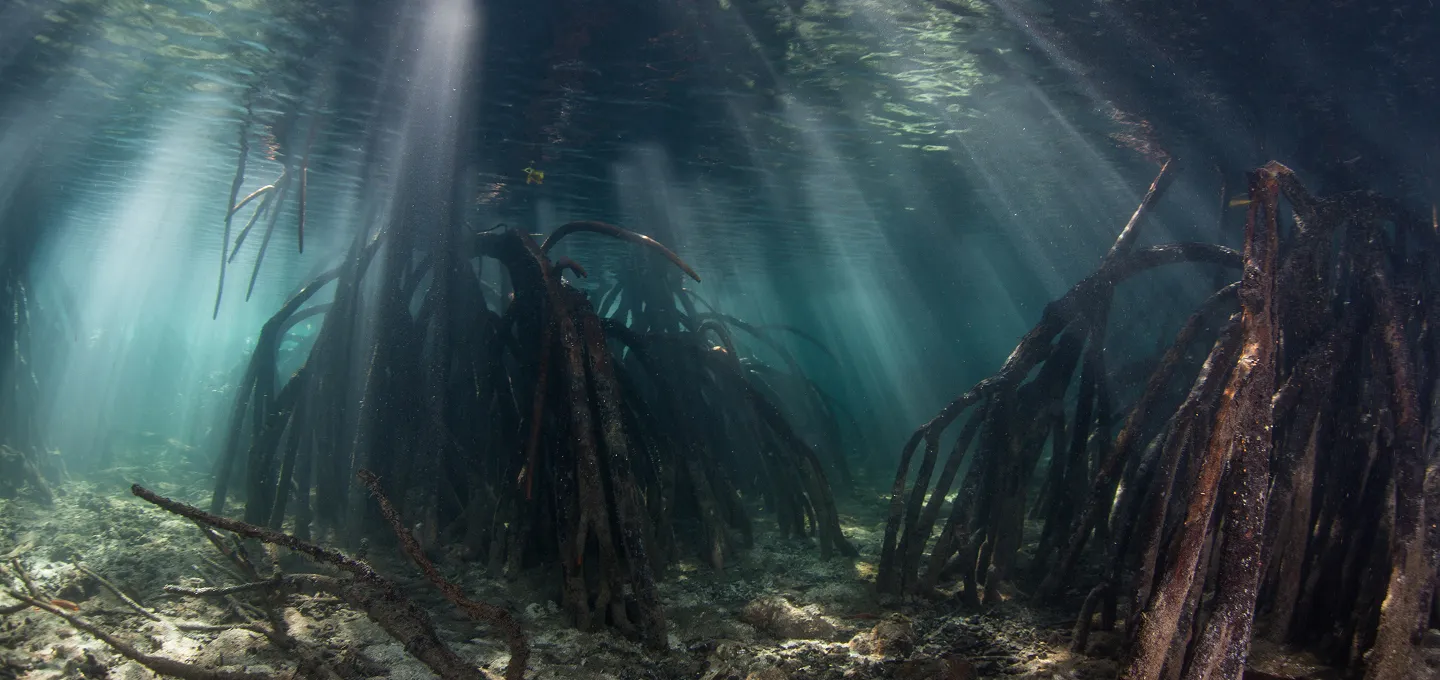
Mangrove trees with exposed roots in shallow seawater under a partly cloudy sky at low tide.

Partner with us

We are engaging and partnering with companies, investors and funders to mobilise investment to projects that deliver nature-based coastal resilience.

From blue carbon investments and natural coastal infrastructure to corporate-philanthropy partnerships that build long-term license to operate, the Facility demonstrates a scalable model for deploying capital for systemic resilience – combining private, public and philanthropic capital – to restore nature, protect coastlines and improve local livelihoods.

Join us to co-develop the next generation of investable coastal resilience projects.

Partner with us
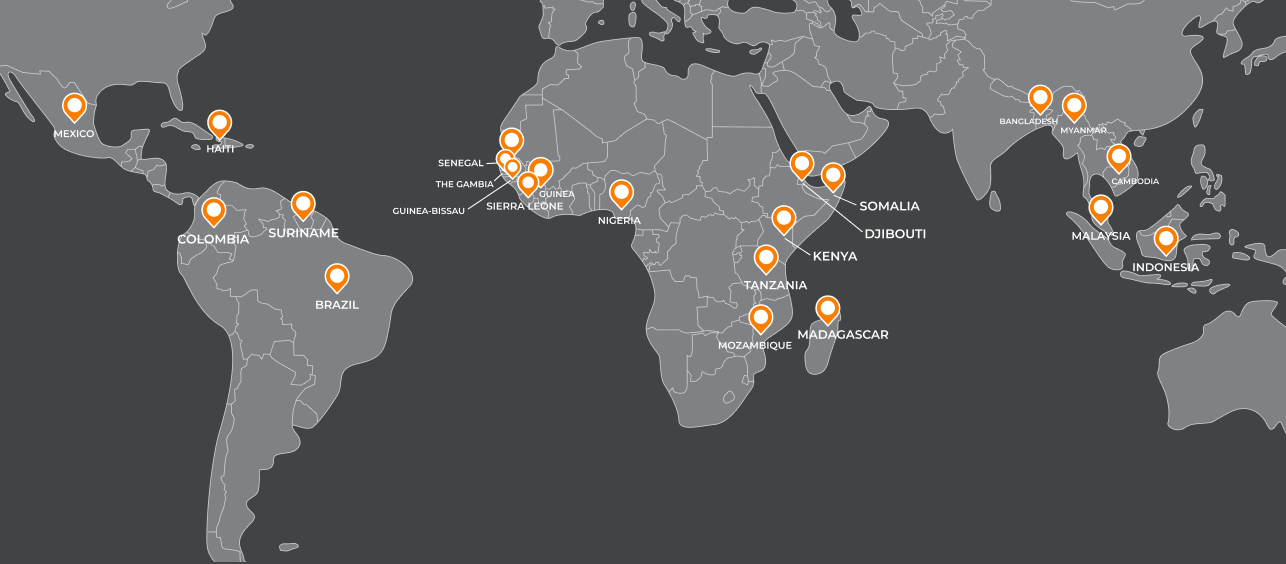
World map highlighting countries in the Americas, Africa, and Asia with orange location markers and labeled names including Mexico, Haiti, Colombia, Suriname, Brazil, several West African countries, Kenya, Tanzania, Mozambique, Madagascar, Somalia, Djibouti, Bangladesh, Myanmar, Cambodia, Malaysia, and Indonesia.

The Facility at a Glance

Icon showing three overlapping green layers stacked diagonally.

50 Projects Worldwide

A global pipeline of nature-based coastal resilience projects, each designed with measurable environmental, social, and economic outcomes.
Simple green outline icon of two hands shaking in a handshake.

Curated Partnerships

Strategic funding partnerships with investors, companies, and foundations to finance projects that deliver tangible Resilience ROI.
Green dollar sign inside a circle icon.

$20 Million by 2027

Mobilising capital to scale nature-based solutions that protect coastlines and livelihoods.
Facility Partners

Why participate

Whether you are securing future credit supply, seeking nature-based returns, or deploying catalytic philanthropic capital — the Initiative offers a structured entry point into blue carbon at early stage.

Corporates

Secure priority access to premium blue carbon credits ahead of market entry.

Investors

Capture risk-adjusted returns from high-growth nature assets uncorrelated with public markets.
Icon showing three overlapping green layers stacked diagonally.

Foundations

Drive biodiversity, coastal resilience and livelihood outcomes through de-risking capital.

A curated pipeline of investment opportunities

The initiative is sourcing, vetting and creating the capital intelligence of a pipeline of opportunities that enables companies, investors and funders to access opportunities.

Currently, the aggregated pipeline available to invest includes:

37

Blue Carbon Projects

$470M

Total Capital Need (USD)

736,000

Hectares

420 Mt

CO2e Sequestration Potential

995,000

People with improved resilience

21

Countries Covered

Featured Projects:

A selection of 10 investment opportunities is presented below. Unlisted projects identified through Earth Security’s direct origination channels are not yet visible to investors or corporates on carbon registries.

Contact us to discuss projects matching with your investment mandates, geographies, or stage preference.

No. Stage Region Size (ha) Type Total Capital Need (USD) Registry Listing
1Pre-feasibilityCentral America5-10kMixed – Conservation Focus$5-10mUnlisted
2Pre-feasibilitySoutheast Asia10-50kConservation$1-5mUnlisted
3FeasibilityEast Africa1-5kRestoration$10-15mUnlisted
4FeasibilitySoutheast Asia10-50kMixed – Conservation FocusOver $20mUnlisted
5PDD DraftingWest Africa10-50kRestoration$15-20mUnlisted
6PDD DraftedSouth Asia1-5kRestoration$1-5mListed
7PDD DraftedWest Africa5-10kRestorationOver $20mUnlisted
8PDD DraftedSoutheast Asia10-50kRestoration$1-5mListed
9PDD Under ValidationCentral Africa10-50kMixed – Conservation Focus$1-5mListed
10PDD Under ValidationSouth Asia1-5kRestoration$1-5mListed

PDD (Project Design Document): The document describing a carbon project’s methodology, monitoring plan, and emissions reduction calculations.

Coastal ecosystems provide over $1 trillion in flood protection benefits yet remain critically underfunded. Investing in nature is investing in resilience.

Underwater view of mangrove roots with sunlight filtering through water.

Get in touch

If you're an investor looking for opportunities, or a project looking for funding, get in touch to discuss how we could work together.

Thank you! Your submission has been received!
Oops! Something went wrong while submitting the form.

Other Programs

Catalytic philanthropy models in Indonesia

We launched the M40 Mangrove Program in partnership with UBS Optimus Foundation in 2022. We are building a global pipeline of blue carbon and mangrove-positive investment opportunities, developing investment pilots to bridge the gap between commercial capital and catalytic philanthropy, and creating a blueprint for mangrove investment at scale.

• A portfolio of investment pilots.
• The 'premium' blue carbon framework.
• A global pipeline of investable projects.
• New private sector leadership models.

Calm river with dense green trees along the bank and tall modern buildings in the background under a partly cloudy sky.
Case Study
Investing in mangroves for coastal resilience in North Jakarta

Among the pilot projects of our M40 programme, we're working in one of the remaining mangroves sites in North Jakarta, Taman Wisata Alam Angke Kapuk (TWA AK), to bring funders and investors..

Read more

Nature-based Coastal Insurance in the Philippines

From 2020-2023, we brought together a collective of leading insurance companies in the Philippines, in partnership with the Philippines Insurance and Reinsurance Association (PIRA) and the insurance regulator, to explore, support and catalyse the development of insurance products that price the protection value of coastal ecosystems, in particular mangroves, for the industry’s future growth. This mobilized the sector to initiate the development of three products that re-position the country’s coastal natural wealth as part of the industry’s tools to increase its resilience to coastal natural disasters.

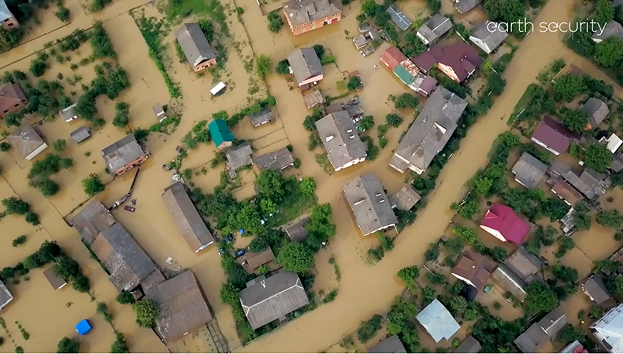
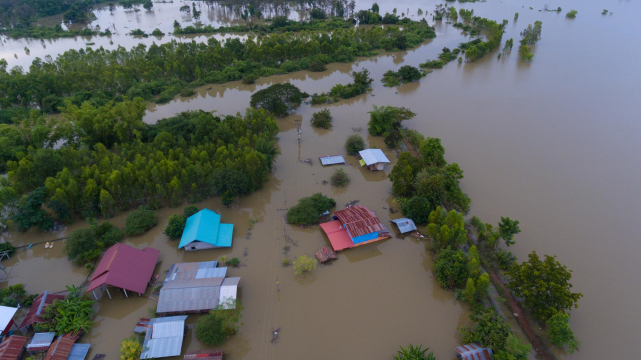
Aerial view of a flooded area with houses partially submerged in brown floodwater surrounded by trees and green vegetation.
Case Study
Pioneering Nature-based Insurance Products in the Philippines

In 2017, we partnered with the Philippine Insurers and Reinsurers Association (PIRA), to explore how NbS could be incorporated into the industry’s climate resilience strategy. We are delighted to share that PIRA is now moving....​

Read more

A Blueprint for a ‘Mangrove Bonds’ in Australia

From 2021-2022, we worked in partnership with HSBC Australia and a collective of local financial institutions and blue economy experts, to explore the opportunities and viable design options for creating a Mangrove Bond in Queensland, Australia. As part of the program we created a local implementation partnership and catalysed collaboration between coastal

infrastructure companies and project developers to take the blueprint into action in selected locations.

FUNDERS

Partners

Together with strategic partners our work is driving a new generation of asset classes with the power to transform how capital markets value and invest in ocean and coastal resilience.

Good Energies logo with a stylized droplet design and the tagline 'Power for a Better World'.Swiss Re logo.GEF logo with a stylized blue and green circular motif and green text: 'gef global environment facility INVESTING IN OUR PLANET'.UBS logo with a black shield featuring three keys crossing each other above the letters UBS in bold black font.HSBC logoLogo with the word 'iki' in lowercase letters next to a stylized flower icon composed of six colorful petals in green, orange, purple, and yellow.

Our work

Investment research

Our research identifies opportunities for natural asset investments linked to infrastructure, focusing on companies and value chains that deliver returns and impact.

Access to catalytic capital

We connect investors and projects across a spectrum of capital, supporting the pathways to scale of innovative models and approaches.

Transition finance platforms

We catalyse finance partnerships among corporates, investors, NGOs and projects, driving collaboration to accelerate the transition to nature-based solutions.

Suppported by
By clicking “Accept”, you agree to the storing of cookies on your device to enhance site navigation, analyze site usage, and assist in our marketing efforts. View our Privacy Policy for more information.